Part 2: The Current State of Representative Services (Ambient Documentation, Triage, Pathology, and More)

In Part 2, we provide a category-by-category overview of representative medical AI web services actually in use in the United States (in no particular order; examples).
Ambient documentation
These listen to the doctor-patient conversation and generate a draft chart note (SOAP, etc.). The aim is to reduce the administrative burden on physicians.
- Abridge / Nuance DAX Copilot (Microsoft) / Ambience / Suki / Nabla
Glossary | SOAP: A standard format for clinical records (Subjective, Objective, Assessment, Plan). Ambient AI drafts notes in this format.
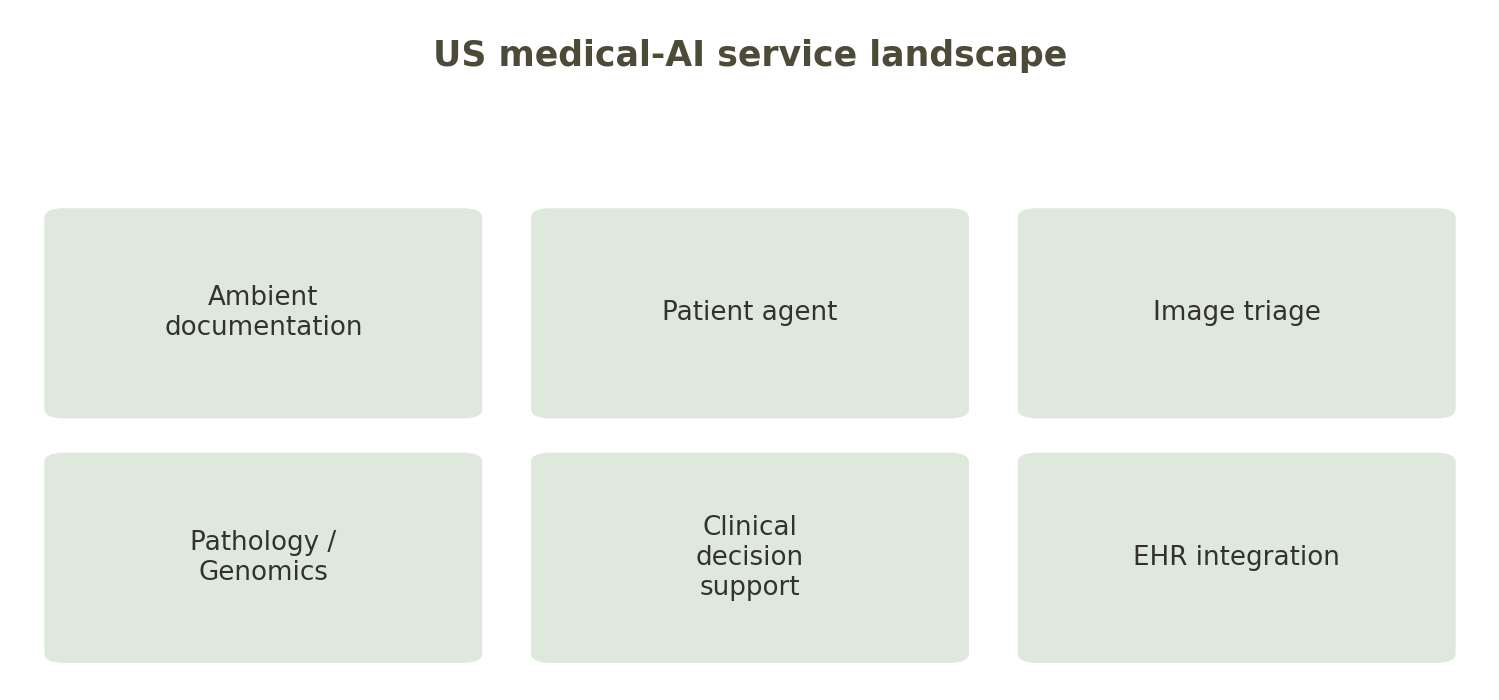
Patient-facing agents and triage
- Hippocratic AI (patient-facing voice agents) / K Health (chat-based intake) / Ada Health (symptom checker)
Imaging triage (emergency and radiology)
These detect critical findings and immediately notify specialists, shortening the workflow.
- Aidoc / Viz.ai / RapidAI (stroke, pulmonary embolism, etc.)
Glossary | Triage: The process of prioritizing patients based on the urgency of their condition. Imaging AI moves "critical findings" to the top of the list, accelerating specialists' initial response.
Pathology and genomics/oncology
- PathAI / Paige (pathology images) / Tempus (oncology and genomics × clinical data)
Clinical decision support and evidence search
- OpenEvidence / Glass Health (differential diagnoses and plans) / AI-enablement of existing tools such as UpToDate
EHR integration
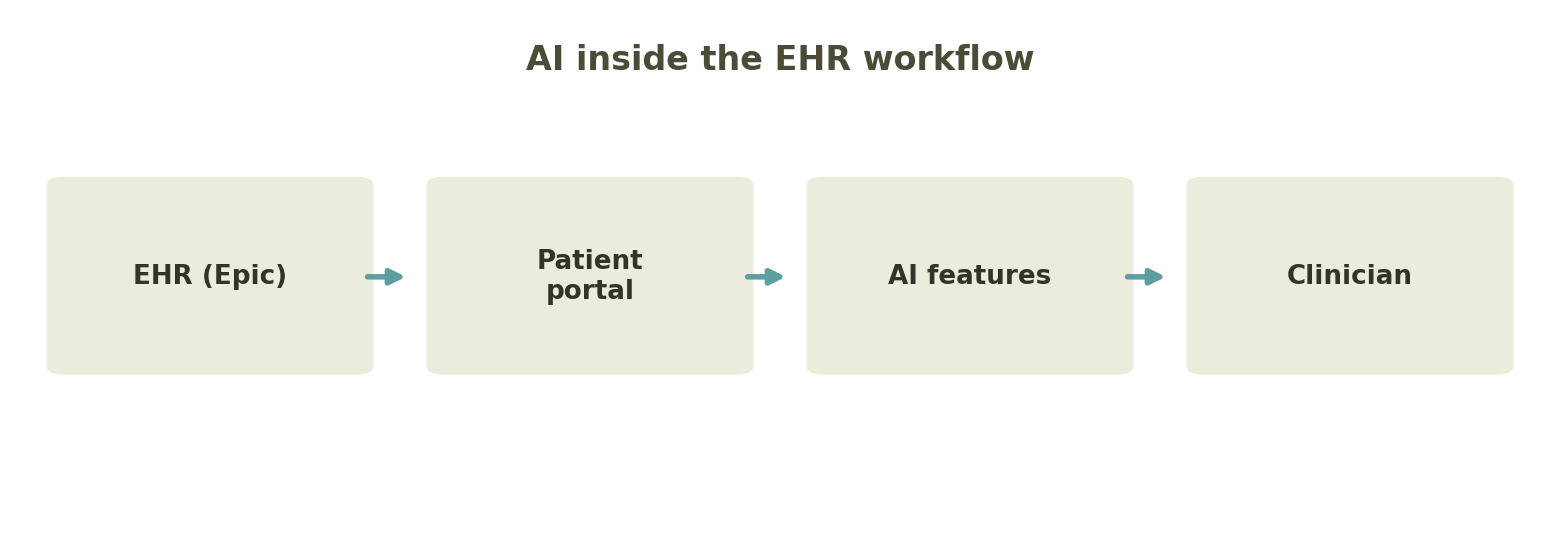
Led by Epic, EHR vendors are integrating AI features such as message-reply drafts, summaries, and search. Experiences delivered through patient portals (MyChart, etc.) are key to widespread adoption.
Key Point: The adoption of medical AI is determined less by its standalone brilliance and more by how seamlessly it integrates into existing workflows (EHRs, patient portals). A mediocre tool on Epic will spread faster than a standalone masterpiece—that's the reality.
We will dig deeper into the "current state, market, and issues" of each service in the next installment (Part 3).
![Why Only a "Handful of Companies" Reaped Enormous Profits from mRNA Vaccines —— How Patent Strategy Decided Pharmaceutical Supremacy [Paid]](/static/images/blog/ai/mrna-dominant-design.png)