Part 1: The Big Picture and Five Questions

In the United States, medical AI web services built around generative AI and large language models (LLMs) are rapidly entering the practical-use stage.
In this series (five parts, free of charge), we will organize the big picture, specific services, the market and its challenges, and IP/licensing strategies,
and answer the questions raised here in the final installment.

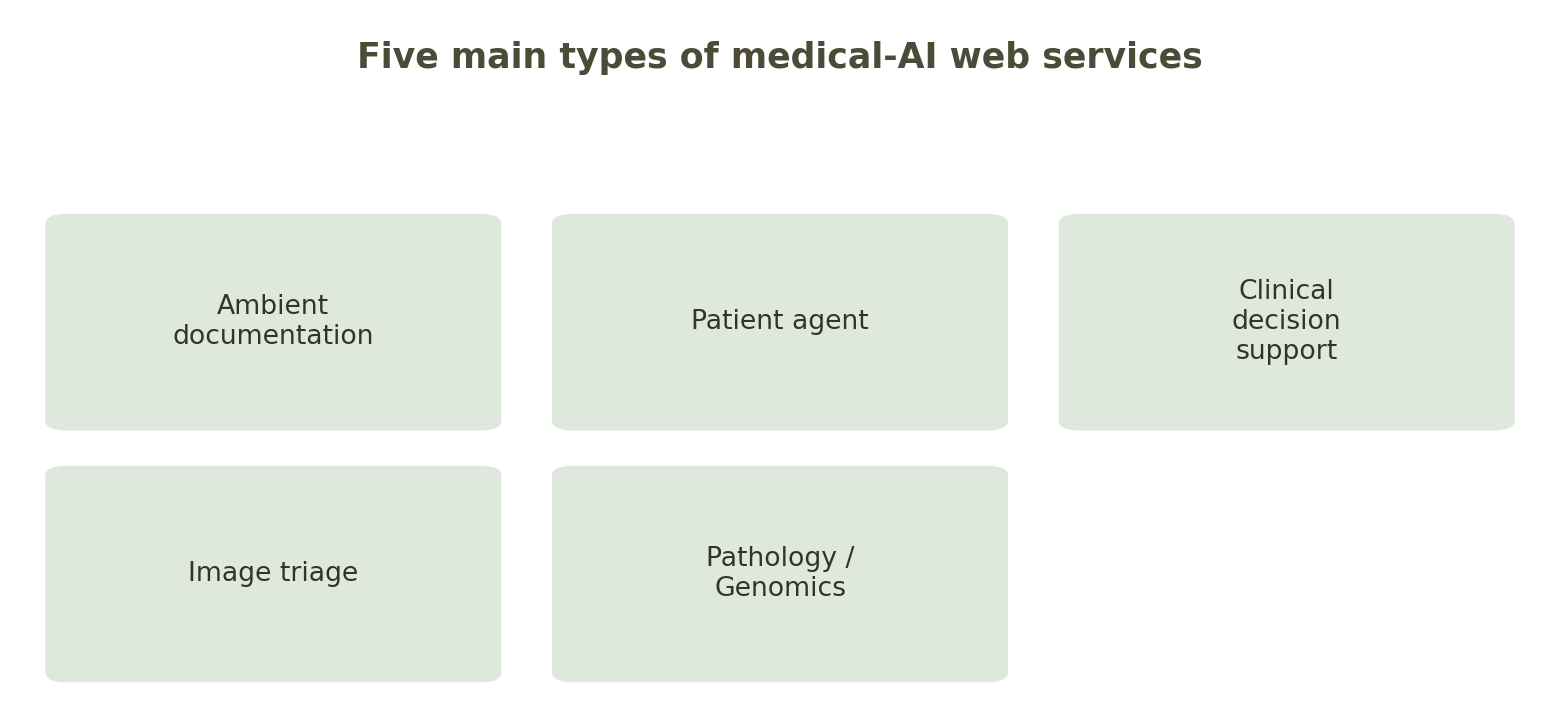
Main Categories of Medical AI Web Services
- Ambient clinical documentation (automatically generating draft medical records from conversations between physicians and patients)
- Patient-facing agents (symptom consultation, pre-visit triage, medication support)
- Clinical decision support / evidence search (answers based on the latest literature)
- Imaging triage (detection and notification of emergency findings such as stroke and pulmonary embolism)
- Pathology and genomics (analysis of cancer pathology images and integration of molecular information)
Why Is the U.S. Ahead?
Abundant venture capital, the development of regulatory pathways including the FDA's SaMD (Software as a Medical Device),
discussions on reimbursement, and room for integration with the vast EHR (electronic health record) infrastructure (such as Epic)—
all of these are driving implementation and adoption.
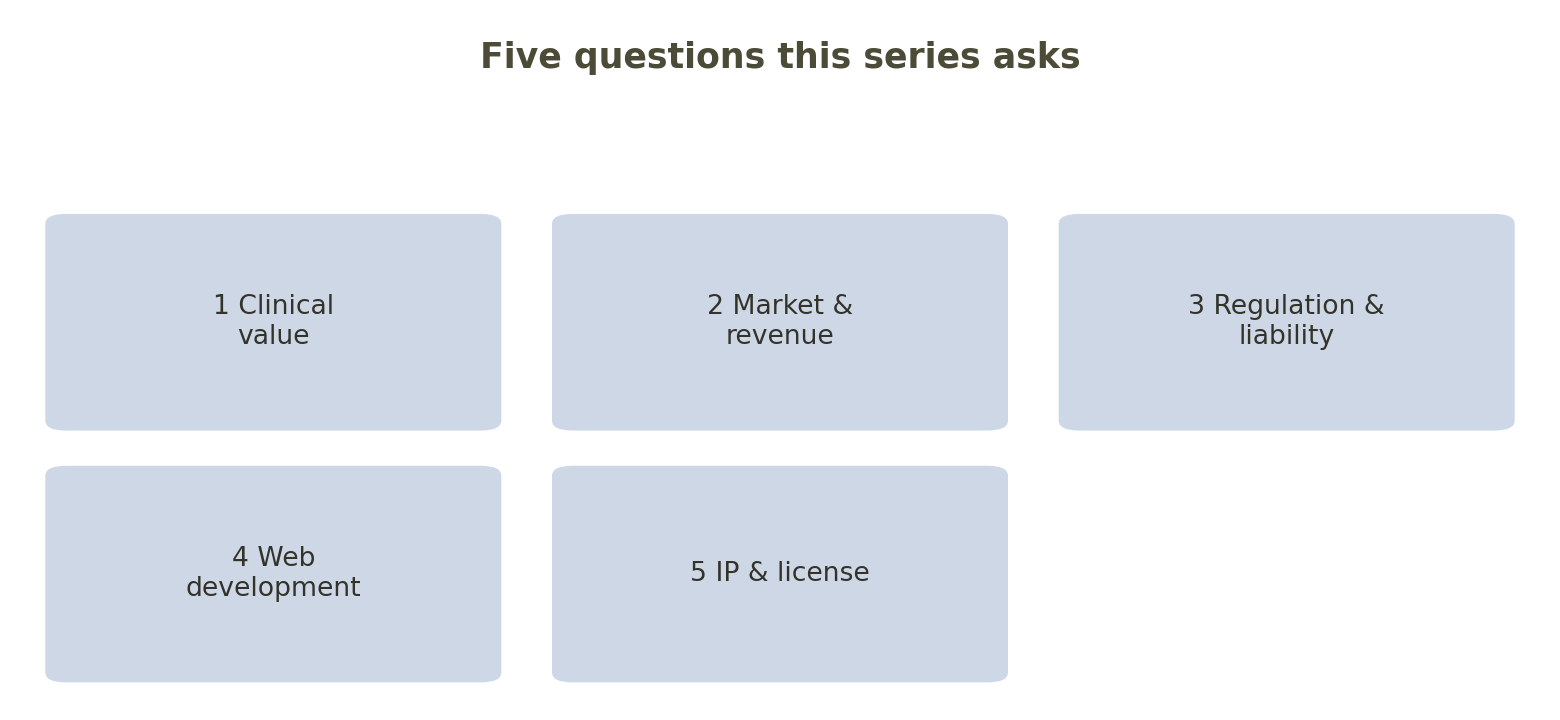
Five Issues This Series Will Examine (Framing the Problem)
- Clinical value: Which services genuinely improve the quality and efficiency of healthcare?
- Market and revenue: What is the reality of the market size and revenue models (subscription / usage-based / reimbursement)?
- Regulation and liability: How should FDA SaMD, HIPAA, and medical malpractice liability be designed?
- Web development: What are the technical and security challenges of web applications that handle PHI (Protected Health Information)?
- IP and licensing: Why is a strategy that encompasses not only patents but also software program licensing essential?
Parts 2 through 4 will explore these in concrete detail, and Part 5 will answer these questions.
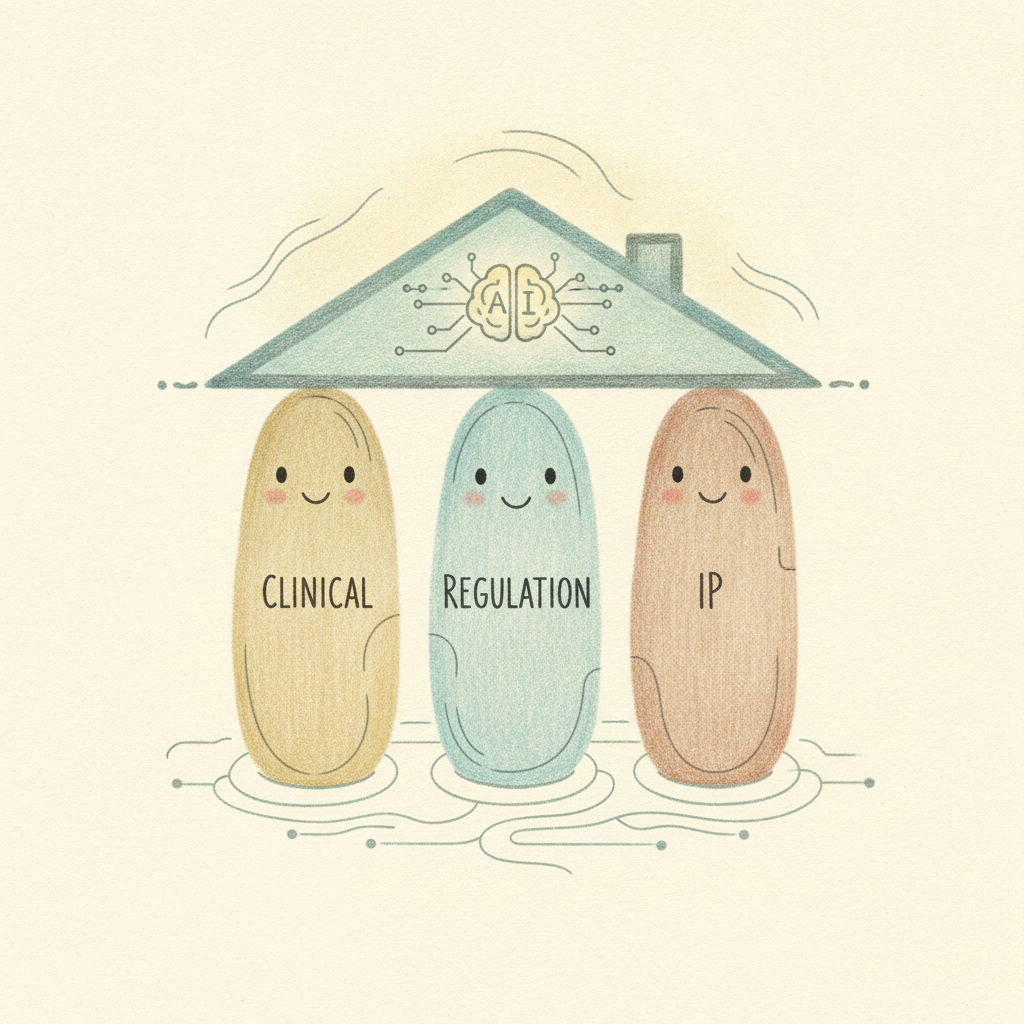
Key Point: These five issues are not independent. A business can only succeed with a trinity of clinical value, regulatory compliance, and IP/licensing. If even one is missing, even good technology cannot survive in the market.
Note: This series is a summary compiled by the editorial team. Specific figures and the latest situation vary depending on the source, and we will update them from time to time.
![Why Only a "Handful of Companies" Reaped Enormous Profits from mRNA Vaccines —— How Patent Strategy Decided Pharmaceutical Supremacy [Paid]](/static/images/blog/ai/mrna-dominant-design.png)