Part 3: Market Size, Challenges, and Considerations for Web App Development

Part 3 covers market size, business models, key challenges, and considerations for web app development and operations.
Market Size and Business Models
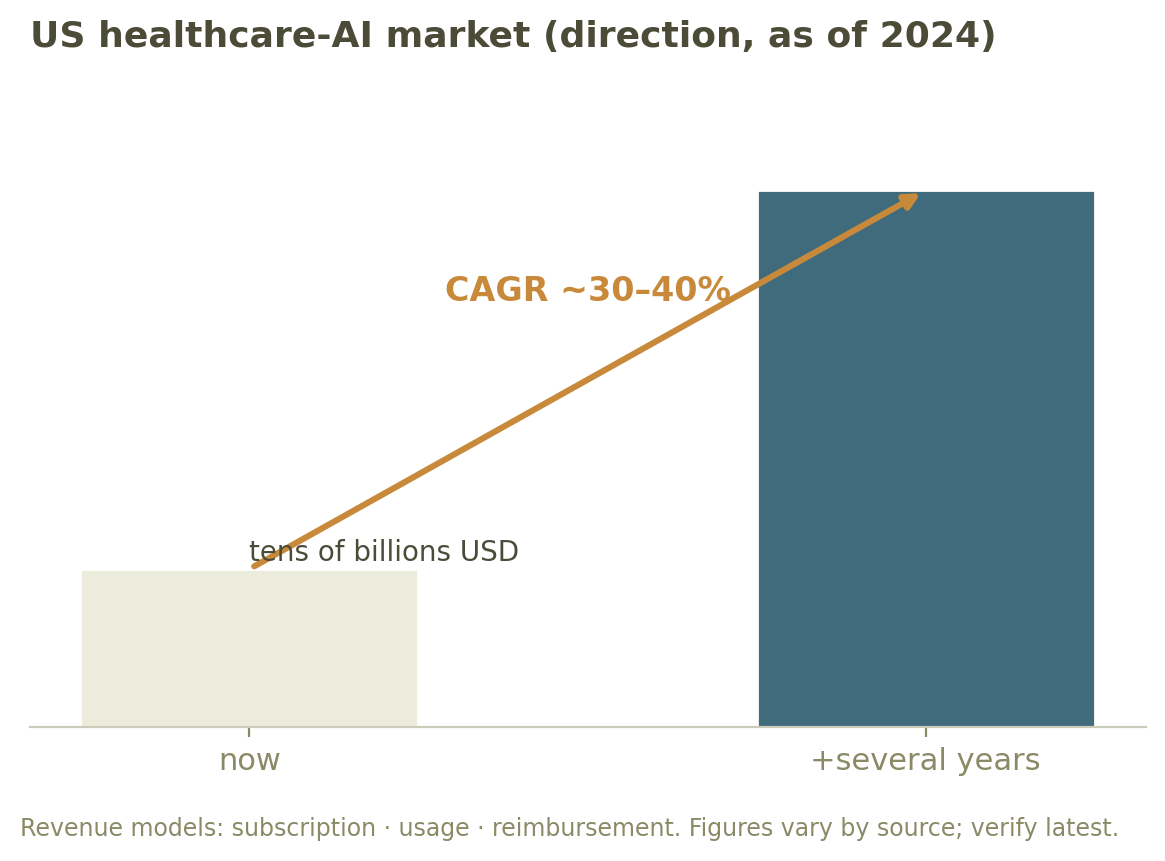
The US healthcare AI market is, according to multiple estimates, heading toward a scale of tens of billions of dollars, with high growth said to be around 30–40% annually (figures vary by source, and the latest values should be verified). Revenue models generally consist of the following combinations:
- Subscription (per medical institution or physician)
- Usage-based billing (per number of processes or API calls)
- Reimbursement / outcome-based (the biggest point of contention for adoption)
Terminology | Reimbursement: The system by which medical services are paid for by insurance. Whether AI is "covered by insurance" is the biggest incentive for hospitals to adopt it.
Key Challenges
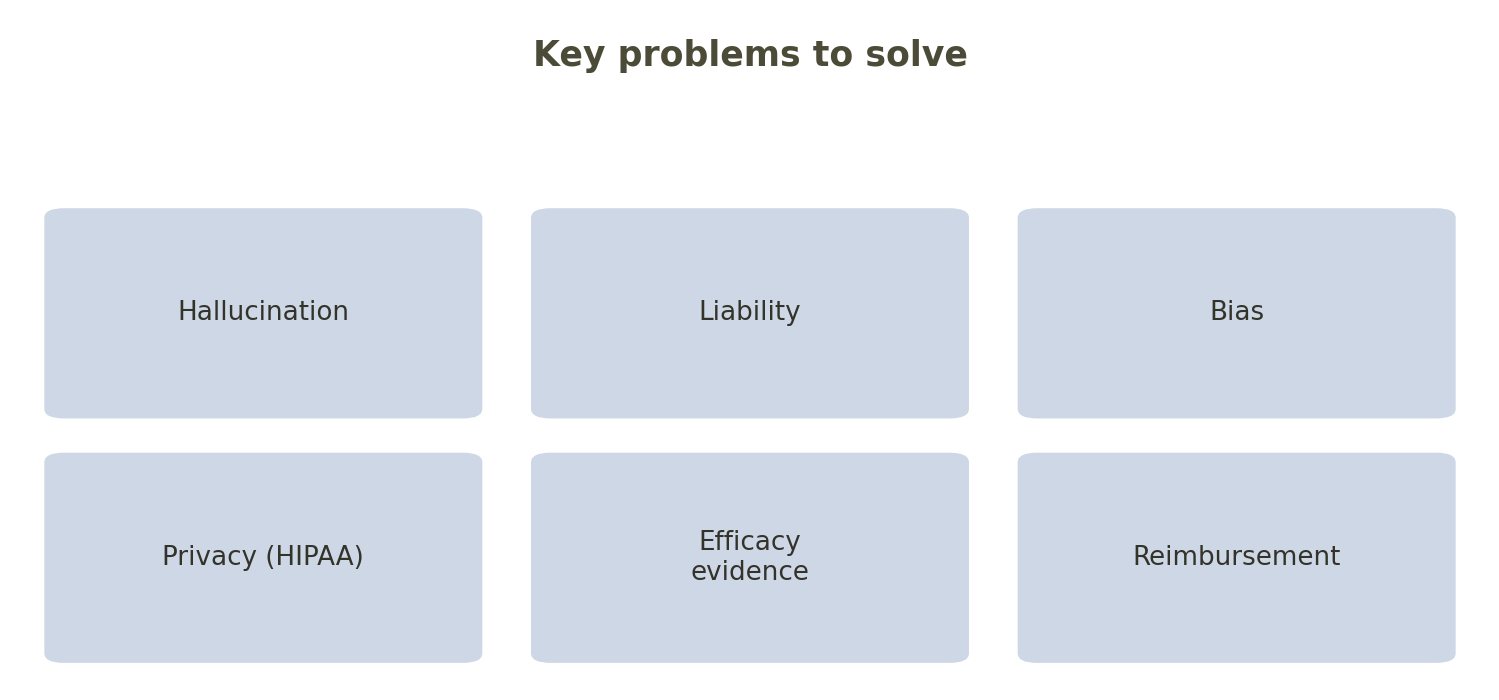
- Safety and hallucination: Misinformation directly impacts patient safety.
- Allocation of liability: Medical malpractice and product liability—who bears the final decision?
- Bias and fairness: Inequity caused by skewed training data.
- Privacy: HIPAA, handling of PHI, and re-identification risks.
- Demonstrating clinical efficacy: A lack of RCTs/prospective evaluations and implementation studies.
- Reimbursement uncertainty: The barrier to monetization.
Terminology | Hallucination: The phenomenon where an LLM generates plausible but incorrect content. In medicine, this can be fatal, so it is mitigated by providing sources and human verification (human-in-the-loop).
Considerations for Web App Development and Operations
Medical AI web services are not "ordinary web apps." Key points at the design stage:
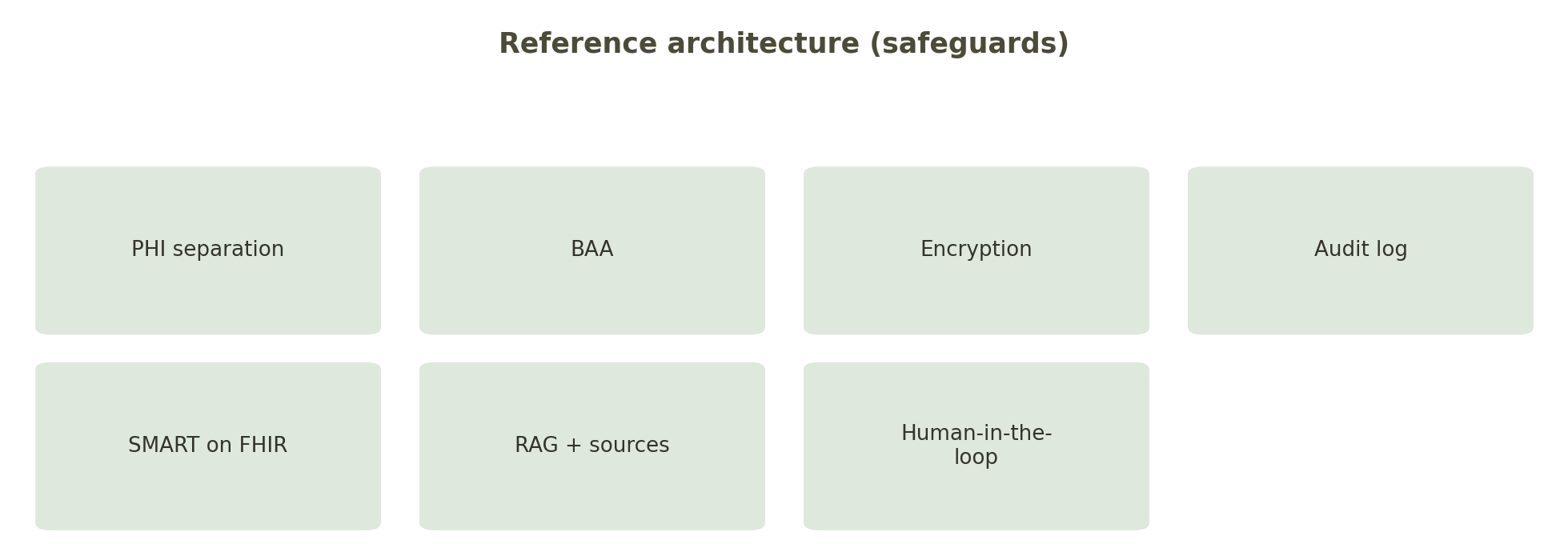
- HIPAA-compliant architecture: BAA execution, encryption of storage/communications, audit logs, least privilege, and data residency.
- Isolation of PHI: Masking/non-transmission of PHI in logs, prompts, and when sending to LLMs (as with [[big-files-local-store]], confidential data is managed separately).
- Safe LLM design: Guardrails, RAG with source attribution, human-in-the-loop, and refusal design.
- EHR/FHIR integration: SMART on FHIR, interoperability, and the safety of write-backs.
- Observability and change management: Model version control, evaluation pipelines, and conformance to the FDA's Predetermined Change Control Plan (PCCP).
- Latency/streaming, cost management, and failure fallback.
Terminology | PHI / BAA: PHI = Protected Health Information. BAA = Business Associate Agreement. Under HIPAA, hospitals are required to sign a BAA with external vendors (cloud, AI) that handle PHI.
Terminology | RAG: Retrieval-Augmented Generation. A technique that retrieves information from a reliable knowledge base before generating a response. It pairs well with source attribution and helps mitigate hallucinations.
Key Points: Medical AI web development is a series of design decisions that impact not only "product quality" but also regulation, liability, and intellectual property. Retrofitting for HIPAA compliance, PHI isolation, and source attribution is extremely costly—it's essential to build them into the initial design.
The next part turns to IP/licensing strategy.

![Why Only a "Handful of Companies" Reaped Enormous Profits from mRNA Vaccines —— How Patent Strategy Decided Pharmaceutical Supremacy [Paid]](/static/images/blog/ai/mrna-dominant-design.png)