Part 5: Conclusion — Answering the Questions Raised in Part 1

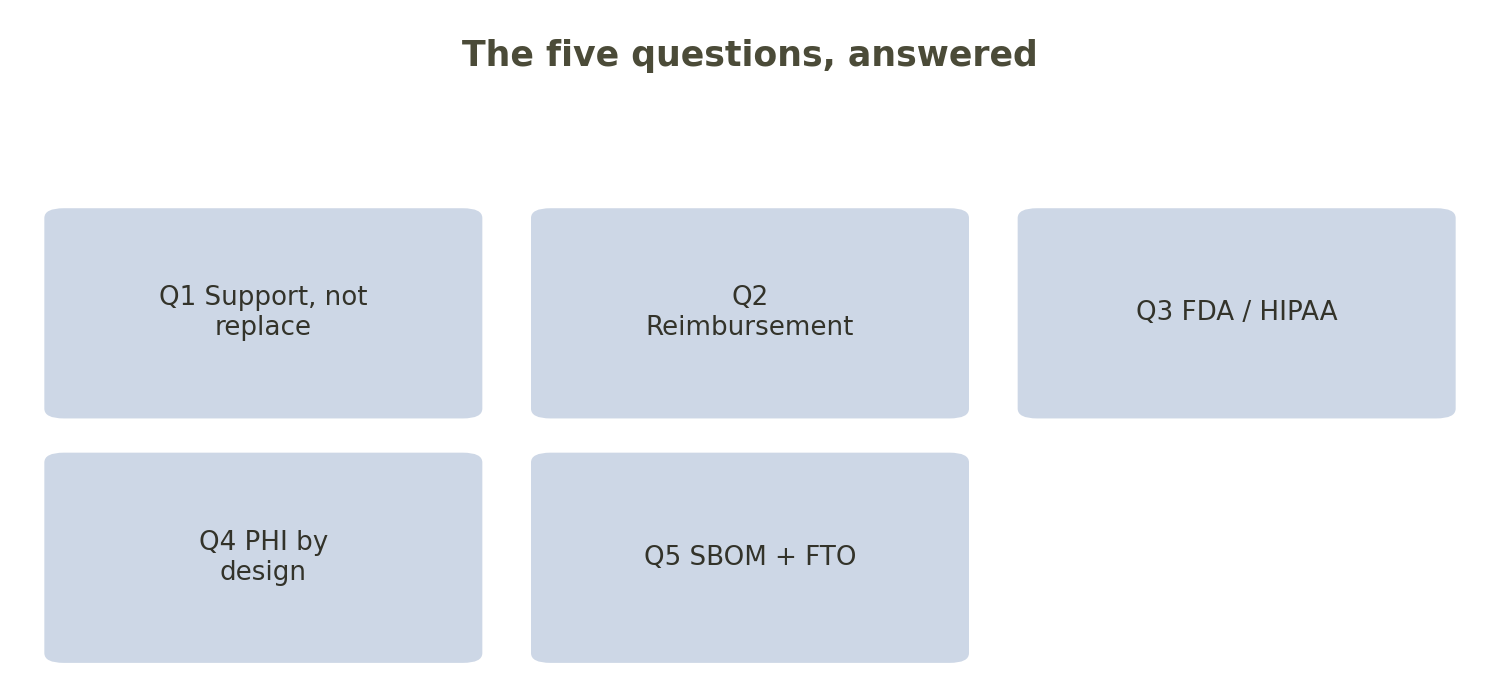
This final installment provides our answers to (and a summary of) the five questions raised in Part 1.
Q1. Where Does the Clinical Value Lie?
Reducing administrative burden (ambient documentation) and emergency triage (imaging) offer readily visible cost-effectiveness and are taking hold first.
Rather than replacing the "final decision" in diagnosis and treatment, designs that support physicians generate value.
Q2. Market and Revenue
The market is growing rapidly, but the design of reimbursement is the watershed for adoption. In addition to subscription plus usage-based pricing, outcome-linked models and distribution via EHR integration are realistic revenue paths.
Q3. Regulation and Liability
Clarifying FDA SaMD (plus management of continuous learning through a PCCP), HIPAA, and medical malpractice liability is a prerequisite.
Source attribution, human-in-the-loop, and audit logs ensure accountability.
Q4. Web Development
PHI separation, encryption, BAAs, FHIR integration, model version management, and evaluation pipelines must be built into the initial design.
As a mere extension of an "ordinary web app," you cannot meet the demands of regulation, safety, and IP.
Q5. IP and Licensing
Patents alone are not enough. Because overlooking network clauses such as AGPL or the licensing of model weights can cause a business to collapse, a comprehensive programming strategy that designs a license inventory, dependency policy, and patent FTO as an integrated whole is essential.
Conclusion
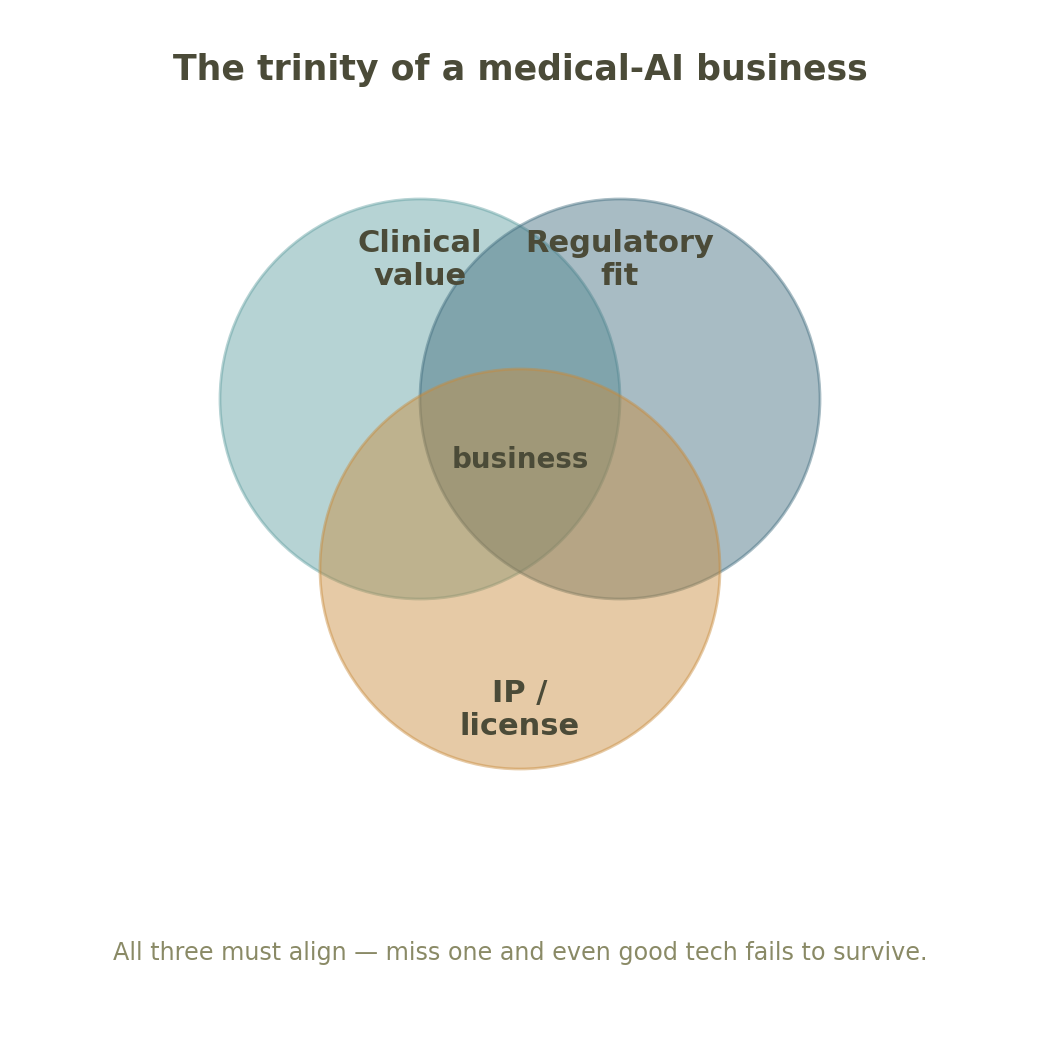
In medical AI web services in the United States, those who design "clinical support × regulatory compliance × IP/licensing strategy" as a unified trinity will win.
Technological sharpness alone is not enough to overcome the walls of regulation, reimbursement, and rights. The key takeaway: The strongest is not the "smartest AI," but the team that designs these three pillars together from the start. Clinical value drives reimbursement, regulatory compliance builds trust, and an IP/licensing strategy protects the business—creating this cycle is what separates winners from losers.
In the next and subsequent series, we will dive deeper into individual Medical web services/apps by region and by field (future installments are scheduled to be paid content).

This series provides general information and does not constitute individual medical, regulatory, or legal advice. For specific consultations on IP, licensing, and patent strategies for medical AI, please contact Shishido & Associates.
![Why Only a "Handful of Companies" Reaped Enormous Profits from mRNA Vaccines —— How Patent Strategy Decided Pharmaceutical Supremacy [Paid]](/static/images/blog/ai/mrna-dominant-design.png)